Showing posts with label Student tips. Show all posts

Monday, August 24, 2015

Why was my paper rejected ?

Just got a tip from Retraction Watch for this paper:

Phillips, David
    2015    Who gets published? Comparative Education 51(3): 303-304.

Phillips present a list of common reasons for the rejection of manuscripts from journals in the field of education research:
  1. ·         wrong journal;
  2. ·         too long/short;
  3. ·         journalism;
  4. ·         extract from report/dissertation unadapted;
  5. ·         no clear topic;
  6.          too little context;
  7. ·         too little theory;
  8. ·         clear gaps in literature;
  9. ·         polemical;
  10. ·         research not fully explained;
  11. ·         failure to relate findings/conclusions to aims/theory/literature;
  12. ·         language/style not checked;
  13. ·         text not proofread;
  14. ·         not situatedin comparative education [or in the appropriate discipline]
  15. ·         plagiarism/legal issues.
My first reaction was, "I'm not sure how helpful this is." Anyone who is a graduate student or a professional ought to know these things. They are taught in graduate seminars, they are taught in the professional socialization that goes on in graduate programs and academic departments. They should be pretty obvious. But then I thought about the most recent paper I have reviewed for a journal. It was the second-worst paper I have reviewed in over 30 years of reviewing manuscripts. This paper had defects #: 2, #5, #6, #7, #8, #10, #11, and #14. So perhaps lists of factors like this do have some value.

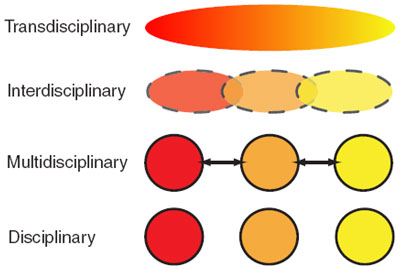
So, why are MY papers being rejected these days? Not counting rejections from Science or Nature (see discussion here), I have have a bunch of rejections over the past 3 years, compared to only a single rejection (that I can recall) in the rest of my career. I don't think the quality of my work has declined. A major reason for the rejections is that the work is interdisciplinary or transdisciplinary. My colleague Sander Van Der Leeuw warned that as I got into transdisciplinary research, I might have trouble getting papers published. Most journals are disciplinary in focus, an orientation that is reinforced by the reviewers they use. The metaphorical disciplinary silos are alive and well in the world of academic journals.

 I had two papers rejected by American Anthropologist. In both cases I was using methods and concepts from  one or more (non-anthropological) disciplines, and made the point that perhaps anthropologists might want to pay attention to these other fields. Well, maybe not..... (click here for my intellectual dissatisfaction with the discipline of anthropology). One paper was resubmitted to the top journal in the field of Urban Studies (with a higher impact factor than AA. Ha!), and it is now published. The other is still being revised. An interdisciplinary paper that I think is important and exciting has now been rejected by three journals. Maybe fourth time around is the charm.

While I hate to admit this, the lesson here may be that younger scholars should refrain from publishing transdisciplinary papers. It's much easier to get a straight archaeology paper published than a paper that mixes archaeology with disciplines that might seem unlikely (e.g., economics, political science, sociology). Some of my recent (published) transdisciplinary papers have had graduate student co-authors, though, so perhaps the lesson is for younger scholars to avoid transdisciplinary single-author papers. Think about getting a senior co-author for anything out of the ordinary. I do make a bigger effort to get rejected papers with student co-authors into print elsewhere right away; I have less urgency for papers with faculty co-authors (yes, I feel very guilty about one particular paper..... Sorry!).

BUT, you can't get a paper accepted OR rejected if you don't submit it. If you are a graduate student in archaeology and you haven't published a paper yet, what are you waiting for?

Thursday, March 28, 2013

This blog and scholarship in archaeology

What is the scholarly or scientific status of blogs like this one? Is there scholarly value here, or is this just an ephemeral platform to rant and rave occasionally? A blog entry is not a rigorous scholarly work, mainly because it is not peer reviewed. Sometimes I say smart things in a scholarly fashion, and sometimes I say clueless things in a non-scholarly fashion. When I have said particularly dumb things, people sometimes catch me and correct my errors, which is great. Scholarship advances through debate and correcting errors. But many of the points I make have serious scholarly value or context, and I try to emphasize those posts by providing citations and bibliographies.

I have just seen a case where one or more of my entries had a positive effect on a reader's scholarship. A few months ago Di Hu, a grad student at Berkeley, emailed me a draft of a paper on ethnogenesis and thanked me for my post on identity, which evidently provided her with some references. It was a good paper and I sent her some comments. Her paper is now posted online-first for the Journal of Archaeological Research (posted here, if you have access). She also posted copies on Academia.edu and Selected Works.

The paper's acknowledgements contains this sentence:

"Smith’s blog "Publishing Archaeology" proved instrumental for key citations and ideas." 

So, thank you, Di, for the mention. While I get quite a few positive comments on this blog, most seem to be from people who enjoy it, rather than people whose research and scholarship benefit from it. While it is nice if I can sometimes entertain people, it is much nicer and more gratifying if I can help readers in an intellectual or professional sense.

Students out there: this post has a keyword, "Student tips" because Di is doing what you other students out there should be doing: publishing papers, and posting them on the internet.


Monday, March 25, 2013

Do grad students have to know social theory?


I am writing this on the bus between Ann Arbor and East Lansing, Michigan. I gave a lecture at the Museum of Anthropology at the University of Michigan on Friday. This was a great experience. The lecture (the “Jeffrey Parsons Lecture”) is run by the archaeology grad students - they are the ones who invited me, and my schedule was set to maximize my interaction with students. Normally when one visits a program, one has individual meetings with the faculty, and then maybe a lunch with a bunch of students. Well, I had lunch with some faculty, but meetings and events all day with grad students (including breakfast and dinner, not to forget Friday afternoon beers, called “007” at Michigan for some reason I can’t recall).


This is a great group of students. They are smart and competent and each one I talked to is doing good research. And they are solid empirical scientists who don't have much use for high-level social theory. But several expressed a concern about whether they would be expected to talk the social-theory talk when interviewing for jobs or otherwise interacting with outsiders. Has social theory so infected the discipline that everyone needs to deal with it (regardless of whether it helps their research or not)? That is an excellent question, one without a short, easy answer. So here are some thoughts on the question.


(1)  You Don't Need High-Level Social Theory


This is a scientific or scholarly statement, not one based on the sociology of the profession. I offer several claims, each of which requires consultation of published literature. That is, I will not spell out the intellectual argument in detail here; see the cited sources. Most of the empirical research in the social sciences proceeds just fine without consideration of high-level social theory. I support this claim in my urban theory paper (Smith 2011). Check out that paper, and read Robert K. Merton and some of the other sources. I am not just expressing my own opinion here; rather, this is the dominant epistemological view in the social sciences outside of anthropology and archaeology.


Here are some examples of empirical social science research that uses middle-range theory and has little or nothing to say about high-level social theory. All of these examples are relevant to archaeology. Or, I should clarify, they are relevant to the archaeological study of urbanism and state societies; there are probably equivalent works for archaeologists working on other issues. I am NOT talking about the idiosyncratic definition Lewis Binford gave the term “middle-range theory,” but about the standard social-science definition, explained at length in my urban theory paper. Try some of these works:

  •        (Sampson 2009, 2010, 2011, 2012)
  •         (Tilly 1992, 1998, 2001, 2005, 2008)
  •         (Gerring 2007, 2012; Gerring et al. 2011)


In case it is not clear, please note that I am using the phrase “social theory” to refer to high-level philosophical notions about the social world.  This is not theory about the nuts and bolts of how the social world works; the latter kind of theory is more often discussed in relation to causal mechanisms (see myprior posts on mechanisms, or see some of the sources in my urban theory paper). I am not saying that “theory” in general is not important, but rather that one particular kind of theory—popular in postmodern, poststructuralist, postcolonial, postprocessualist, and other post circles—is not important for empirical social science. If you haven’t read Abend, you should read his very important paper on the different meanings of the term “theory” in sociology (and, by extension, in anthropology and archaeology): (Abend 2008). You can see my post about Abend, but that is no excuse for not reading the original paper.


(2) But Social Theory is Important to Many Influential Archaeologists


This was one of the concerns of students at Michigan. Would they have to throw in some nominal social theory text to get their articles published, to get grants, and to get a job? My initial reaction is to answer in the negative. But one of the students told me of a young archaeologist working in his region who added a bunch of social-theory jargon at the start of an article just so that it would get accepted at a journal. (I know the paper in question, in fact it is sitting toward the bottom of my “to read” stack, and I have AVOIDED reading it because of the social theory, which seemed to me irrelevant to the basic paper.) I don’t know if the extraneous theory was necessary or not for the paper in question.


I found recently that archaeological proposals to Wenner-Gren that lack high-level social theory are less likely to get funded than those that include it. I don’t know the statistics, but my service on the W-G review panel for two years suggests that this is what students are being told by their advisors. Most complex-societies proposals I read had a bunch of high-level social theory that was not linked to the research design. I rated this as either a negative or a neutral attribute of proposals. That is, if the high-level theory substituted for middle-range theory, methods, and research design (such that the theory was unrelated to the research activities), I rated a proposal lower; if the high-level theory seemed to relate somehow to the research design and didn’t get in the way of the research, I did not rate the proposal lower.


Wenner-Gren nicely sent the reviews of those same proposals by other reviewers (all anonymous). I was shocked when proposals with fancy theory and highly deficient research design and analytical methods were praised (and rated highly) by some of the other reviewers. Similarly, proposals with a great topic and excellent research design but no social theory were rated down by those reviewers. I almost resigned from the committee. There were some outstanding proposals to Wenner-Gren that lacked gratuitous social theory and were not funded. It looks like you DO need to toss around gratuitous social theory to get an archaeology grant from Wenner-Gren (please note that I am NOT talking about any policies or regular practices at W-G; all I can claim is that the particular group of archaeological reviewers over a two-year period seemed to adhere to this perspective). So I wasn’t too surprised last week when one of the Michigan students told me that they all applied to NSF for dissertation support but rarely to W-G.


What about the job market? If a young professional were lucky enough to get a job interview at a place like the University of Chicago or Berkeley, they would certainly have to be able to talk the talk of high-level social theory. I interviewed at Chicago once, years ago, and this is probably one reason I didn’t get a job offer. But if you are interviewing at a mid-range department, there might be an archaeologist on staff who is into social theory. And if you are interviewing at a small anthropology department (or any size program, for that matter), you may very well have to deal with sociocultural anthropologists who might favor an archaeologist who is into such things. I recall hearing about a job search for an archaeologist where the sociocultural anthropologists almost hijacked the search by promoting a lower-ranked candidate over the top-ranked candidate of the search committee, just because the lower-ranked candidate was into social theory and could talk at length with the sociocultural types.


(3) So What is a Graduate Student to do?


Option 1: Ignore social theory, do your research, and accept the consequences. This is fully logical from a scientific standpoint, but dangerous from the point of view of the composition of the profession and its procedures and logistics. As a full professor I can afford to be cavalier about fads like social theory, but this is not a good choice for graduate students and new PhDs.

"Luke, join with me and together we will spread social theory across the galaxy!


Option 2: Read and learn about social theory. Maybe you will like it and be seduced to the dark side of the force (well, I hope not). Or maybe you will find some of it to be useful for your concerns. Or maybe it will seem interesting on a philosophical level, but irrelevant on a practical level (this is my view). Regardless of your views of the matter, it is probably a good idea to figure out exactly how social theory is useful or not useful for your specific research. Evaluate published works related to your research in their use of social theory. Be prepared to talk about the specific ways that you think social theory is or is not useful for your purposes. “Maybe it is fine for those other folks, but for my research, here is the situation.”


If you really don’t think you need social theory, that it is not useful for the kind of scholarship you do, then familiarize yourself with the various critiques that are available. Don’t take my word in an ephemeral thing like a blog (although please do follow out sources I list here and in other posts). Start with my urban theory article. Look for several kinds of things: (1) There are the works showing that social theory is just not needed for social science research (see the above and sources cited in some of my earlier posts; see one of my comments to this post.). If Robert Sampson can make it to the top of the sociology and criminology fields, be elected to the National Academy of Sciences, secure an endowed chair at Harvard, and do some of the best urban research around, all without high-level social theory, then you too can be successful without it (but I doubt he ever had to justify his empirical stance to postmodern colleagues early in his career). Read and digest the relevant works and make sure you can make a good argument from your own theoretical and topical standpoint.


(2) There are the more fundamental epistemological and ontological critiques of the kinds of research that rely on high-level social theory (approaches like interpretive studies, those positing a high degree of relativism, or those that denigrate science and objectivity). I list a few such critiques in a comment to a prior post.


(3) Pay attention to the empirical adequacy of arguments. Many (but not all) of the works that use or tout high-level social theory are empirically deficient in terms of how claims are supported with data, and how theory is used in conjunction with methods and data. Social-science methods texts like those cited above by John Gerring (and there are others) are useful for this.See my prior post on making arguments. I don’t know the causality here (do people with sloppy methods go for social theory? Or does social theory lead to sloppy methods? Or are both generated by a separate underlying causal mechanism?). There seems to be a correlation here, but not a fully determinate relationship.


Sorry to go on at such length. I want to thank the students at Michigan, not only for showing me a good time and good discussion, but also for showing me a program full of excellent students following a vigorous scientific social approach to archaeology.


Abend, Gabriel

2008    The Meaning of "Theory". Sociological Theory 26:173-199.


Gerring, John

2007    Case Study Research: Principles and Practices. Cambridge University Press, New York.

2012    Social Science Methodology: A Unified Framework. 2nd ed. Cambridge University Press, New York.


2011    An Institutional Theory of Direct and Indirect Rule. World Politics 63(3):377-433.


Sampson, Robert J.

2009    Racial Stratification and the Durable Tangle of Neighborhood Inequality. Annals of the American Academy of Political and Social Science 621:260-280.

2010    Eliding the Theory/Research and Basic/Applied Divides: Implications of Merton's 'Middle Range'. In Robert K. Merton: Sociology of Science and Sociology as Science, edited by Craig Calhoun, pp. 63-78. Columbia University Press, New York.

2011    Neighborhood Effects, Causal Mechanisms and the Social Structure of the City. In Analytical Sociology and Social Mechanisms, edited by Pierre Demeulenaere, pp. 227-249. Cambridge Universitiy Press, New York.

2012    Great American City: Chicago and the Enduring Neighborhood Effect. University of Chicago Press, Chicago.


Tilly, Charles

1992    Coercion, Capital, and European States, AD 990-1990. Blackwell, Oxford.

1998    Durable Inequality. University of California Press, Berkeley.

2001    Relational Origins of Inequality. Anthropological Theory 1(3):355-372.

2005    Historical Perspectives on Inequality. In The Blackwell Companion to Social Inequalities, edited by Mary Romero and Eric Margolis, pp. 15-30. Wiley-Blackwell, Malden, MA.

2008    Explaining Social Processes. Paradigm Publishers, Boulder, CO.


Thursday, October 25, 2012

What kind of journal should you publish in?

You have a great paper to submit to a journal for publication. What journal should you pick? Should you aim high, at a top-tier journal, or try for a lower-ranking journal? Your chances are better at the latter, but the publicity and prestige are much better at the former. Sometimes lower-ranking journals are more efficient in getting papers reviewed and published, so in many cases you will have a publication in hand much sooner if you go for the lower-ranking journal. Even if the top journal is fast, a rejection means more time formatting and rewriting the paper for a new journal.

 We all face these choices, but they loom larger for graduate students and young scholars. They need quick publications, which would favor a lower-ranking journal. But a paper in a top journal looks awfully good on your CV. These questions are on my mind now as I begin looking over applications for an archaeology position in my unit. Candidate A has two papers in top journals, but candidate B (at the same level of seniority) has three papers in lower-ranking journals plus two book chapters. Yes, but candidate A has a bunch of papers in conference proceedings.

There is no easy rule of thumb for deciding where to send a paper, but here are a few thoughts. I don't claim to be an expert or to speak for anybody else; these are my personal opinions. If you are thinking about this question in relation to job searches, another complexity enters the stage: will search committees only count publications in hand, will they look at accepted papers, or will they also consider papers under review?

Journal ranking


Journal ranking is a major consideration. Top journals have much wider readership and much more prestige. I've talked about my experiences trying to publish in Science previously (and for some reason, that post is wildly popular, the only entry from this blog with a steady stream of thousands of hits a month. Maybe the thousand of authors rejected by Science find it comforting). My Science rejection ended up in PNAS, "Papers Not Acceptable to Science."  Oops, that should be Proceedings of the National Academy of Sciences. Not a slouch of a publication (much higher ranked than any archaeology journal), but still not on the same level as Science or Nature. Journals are full of excellent published papers that were previously rejected from another journal, typically from a higher-ranking journal. Although I did just come across a paper rejected by a lower-ranking journal published in a higher-ranking journal.

Journals are often divided into levels. A typical scheme is:
  • International: A top journal with an international readership and reputation.
  • National: An excellent journal of national scope.
  • Regional: A journal with a regional focus. These are far more important in archaeology than in other fields, since our research has a strong place-orientation and since we have to publish a lot of data reports.
  • Semi-journal: A publication whose status as peer-reviewed is uncertain.
  • Newsletter: A non-peer-reviewed serial publication.
My typical advice to students is to aim higher rather than lower on the chart, but not too high. Try to get realistic feedback about whether a paper is likely to be considered seriously by a top journal.  The ranking of a journal is not any kind of secure measure of the quality of an article. In archaeology, some of the best work is published in regional journals - they can be quick and they are read by the regional specialists who may or may not read the higher-ranking journals. And some of the top journals contain a surprisingly high number of real stinkers of articles. I won't mention any cases here, but some journals today seem more interested in fashionable nonsense than in solid empirical research.

Non-English language journals

English-speakers who do research in other countries have to publish in local journals. This can be more difficult if it requires publishing in another language. I once translated a paper into Spanish for a Mexican journal. I gave it to a bi-lingual secretary in Cuernavaca who offered to check the translation. After looking it over, she asked if I would mind if she re-translated it from English. Wow. That was the last time I tried translated my own writing into Spanish; now I either write directly in Spanish, or pay for a translator.

But publishing in foreign journals has another downside. Many U.S. scholars without experience in international research or scholarship assume that foreign journals are not peer reviewed. I know of one case where it nearly cost an archaeologist tenure and promotion because the search committee did not want to count journal articles published in a Latin American country. But even if one's colleagues are not so biased as this, it can be difficult to evaluate how non-English language journals rank with respect to English-language journals. I know for a fact that many Mexican journals have rigorous peer review processes. So in evaluating whether to publish in other languages, one has to balance the benefits of publishing in the country of research  (for which there are many benefits and positive features) versus the potential downside of having others possibly evaluate one's publications lower.

Turnaround time


This is another very important factor in deciding where to publish. If you care about how long it will take to get into print, then you want a journal that is quick. I've commented previously about fast review times for the Journal of Anthropological Archaeology and for Urban Studies. And don't forget the three days it took Science to reject my paper! Can't complain on that measure.

It can be difficult to get accurate data on turnaround time. This information is rarely published in a public location, and it is in the interest of slow journals to suppress or cover up the actual record of their turnaround time. In my field, Mesoamerican archaeology, the two top journals are both VERY slow to get papers reviewed, and then to get accepted papers into print. It is hard to say just how slow they are, however. My judgment is based on my own experiences and on talking with colleagues, many of whom complain bitterly about the time delays. I could tell a few choice stories here, but I will refrain. I had a short descriptive paper on urban neighborhoods at Maya cities, and I didn't even consider those two journals because of the time delay. I was going to send it to a regional journal/semi-journal, but the editor of a French international journal expressed an interest and said they could review it quickly. I submitted it, and the process was quick, convenient, and of high quality (the Journal de la Société del Américanistes). I thought it would be better to get the paper out more quickly than to wait for it to come out in a higher-ranked journal with wider readership, and I think I made the right decision.

Edited volumes


What about edited volumes? It is usually much easier to get a paper into an edited volume, especially if it originated at a symposium at a meeting. But if you have followed this blog for a while you already know of my (low) opinions of most edited volumes in archaeology. The corollary of that view is that in most (but not all) cases, I would advise sending a good paper to a journal rather than putting it in an edited volume. See:

But the most important advice I can offer is to get off your duff and finish that article!

Tuesday, September 25, 2012

Why should students publish papers?


I still cringe when I recall the words of a former colleague (not an archaeologist) to the effect that graduate students should not publish papers. Students should spend all of their available time reading everything they can, and worry about publishing once their PhD is in hand. This attitude is closely related to what Krathwohl calls the "dissertation as process" approach --the idea that a dissertation is a methodological exercise and does not have to be an important piece of original research worth publishing. You learn methods and skills in writing a dissertation, and then you go on to apply them later. Do I have to say that I disagree very strongly with this position?

Well, if you don't publish articles while still a student, then you won't have to worry about applying your dissertation skills (because you won't get an academic job). Here are some reasons why graduate students should publish papers:

(1) To build up a resumé in preparation for the job market. When an academic department is hiring a new faculty member, brand-new PhDs are at a definite disadvantage compared to scholars who have been done for a couple of years. The latter people have had time to publish articles and perhaps get a new fieldwork project going. They have more of a track record, which indicates to a search committee that they are a good bet. The only way a brand-new PhD can stack up against someone with three years of post-PhD work  under their belt is if he or she has published a few papers and established a track record. And if you don't get started BEFORE doing your dissertation, you won't have time to get the papers out in time.

(2) To get experience doing the kinds of things that academic researchers must do. Academia is a meritocracy. "Publish or perish" is the way of life. Its a jungle out there. The sooner you get started submitting papers to journals (and doing other kinds of professional activities), the more sophisticated you will be when you complete your PhD and go on the job market. And the more success you will have with later publishing and other professional things.


(3) Because this is what the professional life of an academic is all about. We carry out research and publish the results. We do this because we love it. Publishing is merely one part of the broader academic enterprise. If this is distasteful, then perhaps you are in the wrong line of work. Graduate students are professionals, or at least, professionals-in-training, so you should be doing the things that your professors do (well, some of those things). And all scholars have an ethical responsibility to publish the results of their research.

(4) Because you can. If your seminar papers or conference papers are not good enough to publish, then you are in the wrong line of work. If you have what it takes to succeed in this field, then you are almost certainly sufficiently smart and well-read and creative and motivated to be publishing papers. Now students sometimes have issues of self-confidence and self-doubt (these are related to, but not the same thing as, graduate student paranoia). This is where your professors sometimes need to give you a kick in the butt to work up a couple of your papers into articles. I certainly benefited greatly from the butt-kicking abilities of my own dissertation committee.

So, get off your butt and submit one of your papers to a journal.

Saturday, November 19, 2011

How to give a bad conference talk!

I just found that I had never posted this entry, written over a year ago.

I just got back from the Society for American Archaeology meetings in St. Louis. I have always been amazed at the low quality of many presentations at these meetings, starting at the first one I attended as an undergraduate. I am not just picking on students here; some of the worst clunkers are from senior scholars. It seems that many archaeologists must WANT to be boring and even insulting at conferences.  If that is the case, then I can be helpful! Here are some tips on giving bad presentations:

  1. Read your paper from a prepared text. This will almost always result in a worse presentation than if you talk from notes, or talk from your slides. This is an excellent way to give a boring talk. But it is not fool-proof; sometimes reading produces a good presentation.
  2. Go over the time limit. This makes the session chair mad, it shows a lack of respect for the audience and other presenters, and it makes you look less professional. Maybe this is what you want. If so, read on…..
  3. If you want to go over the time limit, here are some good ways to do it:
    1. Read your paper from a prepared text. Then when you have misjudged the timing (this happens in most cases), and your allotted time runs out, you still aren’t done! The best material is in the conclusions, right?, and so you can’t just skip them. Go on and forge ahead to gain all the benefits of running overtime.
    2. Stop to explain a slide. If you have planned your talk (whether to read or talk from notes), and in the process you take time out to explain a slide, I guarantee you will not finish within the time limit. Yes, this is a money-back guarantee. Try it sometime and let me know if I am right or wrong.
    3. Don’t bother to look at the clock or your watch during your talk.
    4. Don’t waste time practicing your talk ahead of time.
    5. Use a pointer to show something on screen (please don’t use the simple tools of powerpoint to emphasize sites or places or points with arrows, circles, etc.). Much better to wave your pointer (with an unstable hand) in the general direction and hope the audience can find the thing you are talking about, while wasting time.
  4. Well, perhaps you are young and nervous and insecure and feel that something will go seriously wrong if you don’t read your paper. That is probably not the case, but if you feel this way, here is a way to make sure your presentation is bad: Write the text using the style of discourse you would use in writing a journal article. That almost guarantees that your talk will be stiff and boring and difficult to follow. Don’t write it out in the style of verbal discourse, and whatever you do don't be informal or clear; that might produce a good presentation and that is not our goal here. Postmodern obfuscatory prose can help you underachieve.
  5. Here are some tips for making sure your slides are bad:
    1. Have long paragraphs of text in the slide.
    2. Use small font (or odd color schemes) so people can’t read the text easily.
    3. Use complicated charts and graphs that can’t be comprehended quickly and easily. A table that fills the screen with numbers is a great way to put the audience to sleep.
    4. Use a pointer to show the audience something that is painfully obvious on the slide. Needless repetition is good here, both for making you look unprofessional and for putting time on the clock to help you run over the limit.
  1. Insult your audience! (this should be #6, sorry) If you don't think the tips listed above will be sufficiently damaging to your talk and reputation, you can step it up a notch and insult the intelligence of your listeners. One of my favorite tricks is to put a bunch of text up on the screen, and then read it out loud, verbatim. That insults me every time.

If you follow some of these tips, you will be sure to give a low-quality presentation at your next professional conference.

Tuesday, October 26, 2010

Should graduate students publish?

For much of my career, this seemed like a silly question. Of course grad students should publish journal articles, book chapters, etc.. I was socialized to believe this. My first few publications originated in term papers that my professors insisted I submit to a journal. I think I had four journal articles out before I applied for my first teaching position.

When teaching at my prior university, I was surprised to learn that some of my colleagues discouraged their students from publishing papers. Grad school is to read and to learn and to write a dissertation. Working up papers for publication takes time away from the important tasks, so students should not be encouraged to waste precious time on publications. Once the Ph.D. was in hand, students can publish all they want (and presumably they would spend less time at that point hassling their professors for help in turning term papers into articles). Needless to say I disagreed strongly with this view of student publishing. If grad students don't publish anything, how will they stand a chance in today's job market?

When I moved to ASU, I was pleased to find an academic culture that encouraged students to publish, and I found the extent of student publishing (at least in archaeology) quite impressive. The question of student publishing did not seem to be a concern anymore. Of course students should publish. But then at a party last week, two younger colleagues said they had been discouraged from publishing while in grad school. These were major departments at top universities. Publishing takes up precious student time, and students aren't smart or accomplished enough to publish anything interesting. I was flabbergasted. My view is that if a student's term papers aren't good enough to turn into journal articles with a little work, then they are probably wasting their time with graduate study.

So, for you students out there: Get off your rear and start publishing. And let me modify my second sentence above: you should definitely publish journal articles, but think twice about chapters in edited volumes. The latter will take longer to appear in print, they have less prestige, and fewer people will read them. See some of my earlier posts on edited volumes,  Here,  or  Here.

Friday, July 2, 2010

Some professional pet peeves

1. Why do people email huge files?

Someone has sent me a 16 MB email message. My email and all internet activity have been very slow, probably because of Hurricane Alex. While Outlook tries to belch out this 16MB message (its been trying for almost 24 hours), other email has evidently been blocked.

Instead of emailing huge files, please post them on your server and send me the URL, so I can download them at a convenient time without messing up my email. You don't have server space? Well, where do you post your publications? If you have a university or museum affiliation, then you have access to server space. Use it. Set up a website, and include a targeted directory where you place big files for people to get.

If the above seems too much (not sure why, since it is pretty easy), then use a commercial service like "You Send-It" where you can upload files and send invitations to selected people, who then are sent a password to access the file. But please don't email huge files!

2. Why do people omit the date from their CV?

Do you ever update your CV? Well, then you need to provide a date at the top. Here are 2 cases where the lack of such a date has had negative effects. (1) An opportunity came up for some funds for a student who was out of contact doing fieldwork. The relevant faculty found they had 2 different versions of the CV, and it was not clear which was current and correct. They had to make a quick decision, and they may have used the wrong copy of the CV. I don't know what happened, or whether this made a difference. But having the date on the CV would minimally have saved the faculty some aggravation.

(2) Someone asked me for a quick informal evaluation of an archaeologist (a faculty member at another university). I looked at their CV from their departmental website, and concluded that this person did not publish much and was not very active professionally. My impression was that the CV was a year out of date. Well, it turns out (I later saw a current CV) that the CV was three or four years out of date. The person had put the likely (future) publication dates for in papers in press, which made the CV seem later than it actually was. The current CV revealed that this person had been extraordinarily active in the past 3 years, any my opinion of their productivity increased greatly.

So, unless you have a weak CV and want to fool people into thinking that its weakness comes from the document being out date rather than from your failure to produce things, you should put the date on your CV. And by the way, please update your websites. Out-of-date departmental websites are all too common at most universities, and this can have a number of negative effects on their usefulness, both intellectually and in terms of publicity and professional opinion.

3.Why do people waste so much paper with their manuscripts?  (journal editors take note)

If you send me a paper to read, please use margins no larger than 1 inch (left and right), and please use less than 1 inch margin, top and bottom. Please use single spacing, with 1/2 line spacing between paragraphs. You can single-space the bibliography, even use a smaller font. When people send me bloated Word files, I reformat them like this to save paper (which means I can't refer to page numbers in my comments, which is a pain). More compact manuscripts are good for the environment, they are good for my wallet, and my stapler will work on the document. But when I get pdfs, I can' reformat them. I resent getting a 100 page document to review from a journal for what can be formatted as a 60 page single-spaced document (which is still too damn long for most papers, in my opinion). But don't skimp on space with small font. My eyes have trouble with 10 point font; use 12 point.

-Cranky in Toluca

Sunday, April 18, 2010

How to give a bad presentation at a conference

I just found that I had never posted this entry, written over a year ago.

I just got back from the Society for American Archaeology meetings in St. Louis. I have always been amazed at the low quality of many presentations at these meetings, starting at the first one I attended as an undergraduate. I am not just picking on students here; some of the worst clunkers are from senior scholars. It seems that many archaeologists must WANT to be boring and even insulting at conferences.  If that is the case, then I can be helpful! Here are some tips on giving bad presentations:

  1. Read your paper from a prepared text. This will almost always result in a worse presentation than if you talk from notes, or talk from your slides. This is an excellent way to give a boring talk. But it is not fool-proof; sometimes reading produces a good presentation.
  2. Go over the time limit. This makes the session chair mad, it shows a lack of respect for the audience and other presenters, and it makes you look less professional. Maybe this is what you want. If so, read on…..
  3. If you want to go over the time limit, here are some good ways to do it:
    1. Read your paper from a prepared text. Then when you have misjudged the timing (this happens in most cases), and your allotted time runs out, you still aren’t done! The best material is in the conclusions, right?, and so you can’t just skip them. Go on and forge ahead to gain all the benefits of running overtime.
    2. Stop to explain a slide. If you have planned your talk (whether to read or talk from notes), and in the process you take time out to explain a slide, I guarantee you will not finish within the time limit. Yes, this is a money-back guarantee. Try it sometime and let me know if I am right or wrong.
    3. Don’t bother to look at the clock or your watch during your talk.
    4. Don’t waste time practicing your talk ahead of time.
    5. Use a pointer to show something on screen (please don’t use the simple tools of powerpoint to emphasize sites or places or points with arrows, circles, etc.). Much better to wave your pointer (with an unstable hand) in the general direction and hope the audience can find the thing you are talking about, while wasting time.
  4. Well, perhaps you are young and nervous and insecure and feel that something will go seriously wrong if you don’t read your paper. That is probably not the case, but if you feel this way, here is a way to make sure your presentation is bad: Write the text using the style of discourse you would use in writing a journal article. That almost guarantees that your talk will be stiff and boring and difficult to follow. Don’t write it out in the style of verbal discourse, and whatever you do don't be informal or clear; that might produce a good presentation and that is not our goal here. Postmodern obfuscatory prose can help you underachieve.
  5. Here are some tips for making sure your slides are bad:
    1. Have long paragraphs of text in the slide.
    2. Use small font (or odd color schemes) so people can’t read the text easily.
    3. Use complicated charts and graphs that can’t be comprehended quickly and easily. A table that fills the screen with numbers is a great way to put the audience to sleep.
    4. Use a pointer to show the audience something that is painfully obvious on the slide. Needless repetition is good here, both for making you look unprofessional and for putting time on the clock to help you run over the limit.
  1. Insult your audience! (this should be #6, sorry) If you don't think the tips listed above will be sufficiently damaging to your talk and reputation, you can step it up a notch and insult the intelligence of your listeners. One of my favorite tricks is to put a bunch of text up on the screen, and then read it out loud, verbatim. That insults me every time.

If you follow some of these tips, you will be sure to give a low-quality presentation at your next professional conference.